
 Sloane R.
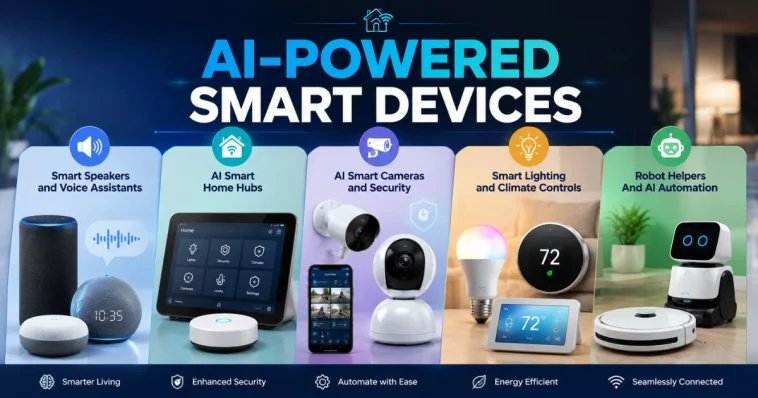
Homes are becoming smarter and more intuitive with the rise of AI-powered smart devices. These gadgets do more than just respond to phone commands—they learn from daily routines, communicate with each other, and bring automation to everyday life. From advanced security cameras to AI assistants that help manage schedules, the latest generation of smart devices is reshaping the way people live.
As more people adopt connected technology, it becomes essential to identify which devices truly provide value and improve daily life. This article explores the standout AI‑powered products and systems shaping modern homes, how they work, what benefits they bring, and how buyers can choose the best options for their needs.
Why AI‑Powered Smart Devices Matter
AI‑powered smart devices represent a shift from simple automation to intelligent interaction. Traditional smart gadgets respond to commands. In contrast, AI systems anticipate needs, make decisions based on patterns, and adapt to changing circumstances. For example, modern AI smart systems can learn daily routines and adjust lighting, climate, or security settings without repeated manual input.
This change marks a new era in home technology. Devices are no longer isolated pieces of hardware. They coordinate through cloud platforms, voice assistants, and edge computing to deliver a seamless living experience. As consumers increasingly expect convenience and personalization, the value of interconnected AI systems continues to rise.
Smart Speakers and Voice Assistants
One of the most familiar AI-powered smart devices in the home is the smart speaker. These gadgets do more than play music. They serve as the voice interface to an entire ecosystem of connected devices.
Key Features of Modern Smart Speakers
- Voice Control For Multiple Devices: With systems like Amazon Alexa+ and Google Home, smart speakers can control lights, thermostats, cameras, and more via spoken commands.
- AI‑Generated Content: The latest Alexa feature can generate podcast episodes on almost any topic based on voice prompts.
- Context Awareness: AI assistants can perform chained tasks, such as adjusting lighting and starting music, with a single phrase, thanks to advanced natural language understanding.
Popular Smart Speaker Examples
- Amazon Echo Dot Max and Echo Studio: These devices offer improved audio and enhanced AI capabilities for immersive home control.
- Google Nest Hub Max with Gemini AI: Combines AI processing with a display to manage routines and deliver visual info.
Smart speakers blend convenience and power, making them a great starting point for anyone building an AI‑enhanced home.
AI Smart Home Hubs
For deeper integration and automation, AI smart home hubs act as the central brains of a connected network. These devices coordinate multiple smart gadgets and unlock more advanced features.
Why Hub Systems Are Worth Considering
Hubs bridge the gap between different protocols and brands, allowing devices from Philips Hue, Blink, Google, Aqara, and others to work together smoothly. These systems support Matter, Zigbee, Bluetooth Low Energy (BLE), Thread, and other standards that form the backbone of modern smart homes.
Standout AI Smart Home Hubs
- Home Assistant Green + Coral AI: Delivers local AI performance with fast processing and broad device compatibility.
- Homey Pro 2026: Known for support across multiple protocols and a flexible automation platform for advanced users.
- Aqara Hub M3: Focuses on local processing and stringent privacy, making it ideal for privacy‑conscious homeowners.
- Google Nest Hub Max: Serves as a hub and screen, with Gemini AI handling multiple automated routines.
These hubs help tie together your smart lights, locks, thermostats, and security systems, turning a collection of separate gadgets into a unified, responsive ecosystem.
AI Smart Cameras and Security
Protecting the home remains one of the main reasons people invest in smart home technology. AI has pushed security cameras beyond simple motion detection into contextual awareness and automated responses.
What AI Does For Security
- Visual Intelligence: Cameras powered by AI can distinguish between a package delivery and a person loitering and trigger specific routines based on what they see.
- Automated Alerts: Instead of sending every movement notification, intelligent cameras can filter data and notify you only of meaningful events.
- Routine Triggers: Visual detection can be tied into other systems. For example, seeing a familiar face could disarm the home’s locks or adjust the lighting.
Examples of AI Security Devices
- Logitech Circle View Doorbell and Nest Cam3eras: Rated well in lab tests for overall performance and integration.
- Arlo Go 2 LTE: Offers flexible connectivity and built‑in AI features in a battery‑powered design.
AI cameras provide peace of mind and help make the home and surroundings safer without overwhelming users with false alarms.
Smart Lighting and Climate Controls
AI also enhances comfort through smart lighting and climate systems that adapt to behavior patterns.
How AI Enhances Comfort
- Learning Your Habits: Smart thermostats and lighting systems observe usage patterns and adjust temperature or brightness accordingly, often without user intervention.
- Energy Efficiency: Automated adjustments based on occupancy and time of day help reduce power waste while keeping living spaces comfortable.
Notable Smart Lighting And Climate Gadgets
- Philips Hue Lights: Known for wide compatibility and programmable scenes that can be automated via AI.
- Nest Learning Thermostat: Adapts to household rhythms and minimizes energy use over time.
- Smart Plugs And Smart Switches: Bring AI automation to appliances and legacy lighting systems.
These systems make daily routines smoother and can help a household become more energy-conscious.
Robot Helpers And AI Automation
AI‑powered smart devices are no longer limited to passive roles. Robots are moving into cleaning, pet interaction, and basic home care.
What Robot Devices Bring
- Automated Cleaning: Robot vacuums and mops operate independently, adjusting routes based on floor layouts and obstacles.
- Pet Interaction: Companion robots like Tuya’s Aura can engage pets with playful features, interaction, and tracking.
- Routine Automation: Some bots can act as mobile sensors, collecting data and even linking to other devices for coordinated action.
While many robotic devices include AI features to improve performance, buyers should balance features with cost and actual household needs.
Privacy And Security Considerations
AI features often require vast amounts of personal data to be effective. For many users, concerns about security and privacy remain top priorities when using connected devices.
Key Points To Consider
- Data Transparency: Some devices send data to cloud services for processing, raising questions about who controls that information.
- Local Processing: Devices that run AI tasks locally offer greater privacy but may entail higher upfront costs.
- User Control: Clear privacy settings, such as microphone and camera toggles, help users decide what stays private.
When choosing AI‑powered smart devices, consider the trade‑offs between convenience and privacy.
Future Trends In AI Smart Devices
The next generation of innovation is moving toward AI systems that are even more integrated, proactive, and responsive to user needs.
What’s On The Horizon
- Wearables With AI Health Tracking: Devices like the upcoming Oura Ring 5 use AI to offer coaching and detect health signals.
- AI Companions: Desktop companions like Lepro Ami bring AI into shared spaces through screens and gesture tracking.
- Advanced Voice And Context Awareness: Voice systems will make commands more natural and contextual.
Consumers can expect AI‑powered smart devices to feel more integrated into daily life, offering personalized support across health, security, comfort, and entertainment.
How To Choose The Right AI‑Powered Smart Devices
To select the best products for your home:
- Identify Your Needs: Determine whether your priority is security, comfort, or automation. Understanding your main goal helps narrow down which devices are essential.
- Check Compatibility: Make sure new devices integrate smoothly with your existing smart home ecosystem. Incompatible devices can cause frustration and limit functionality.
- Balance Privacy And Convenience: Decide how much personal data you are willing to share with devices. Some products offer more automation but require more data access.
- Start With A Hub Or Speaker: Central hubs or smart speakers often serve as the main control point for multiple devices. Starting here can simplify management and enable later expansion.
Careful planning ensures a smooth, efficient, and well-coordinated smart home setup.
Frequently Asked Questions
- What Are AI‑Powered Smart Devices?
Devices that use artificial intelligence to learn, anticipate, and automate tasks for a more responsive home experience.
- Do AI‑Powered Smart Devices Work Without The Cloud?
Some devices perform AI tasks locally to keep data private, while others leverage cloud services for advanced capabilities.
- What Is A Smart Home Hub?
A central device that coordinates various smart devices, enabling communication and unified automation.
- Can AI Smart Cameras Reduce False Alerts?
Yes. Visual intelligence helps cameras distinguish real events from harmless motion.
- Are AI Voice Assistants Worth It?
For many users, this simplifies daily routines and centralizes control of smart devices.
Transform Your Home With AI‑Powered Smart Devices
The latest AI‑powered smart devices offer more than convenience—they create a connected, responsive, and personalized home environment. From smart speakers and AI hubs to intelligent cameras and climate controls, these devices work together to simplify daily routines and enhance security, comfort, and efficiency.
As AI technology continues to evolve, investing in smart devices today can future-proof your home while providing immediate benefits. By choosing the right combination of gadgets, considering compatibility, and balancing privacy with automation, any household can enjoy a smarter, safer, and more intuitive living space.
Whether you are upgrading a single room or redesigning your entire home ecosystem, AI‑powered smart devices are worth exploring for anyone seeking a seamless, intelligent, and modern lifestyle.